
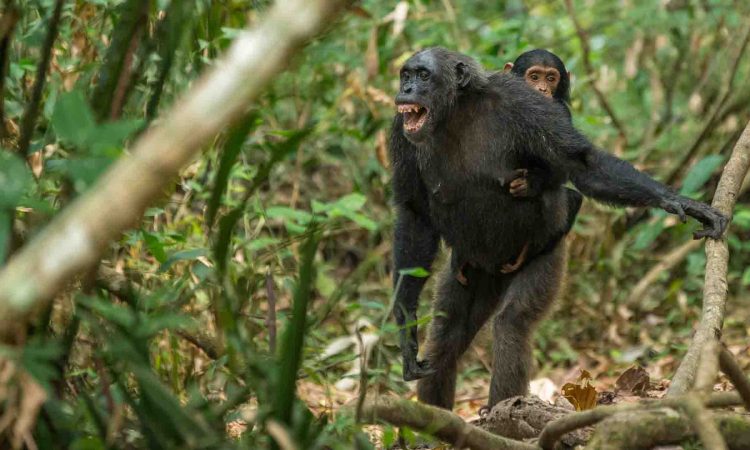
Where to see chimpanzees in Tanzania?
Most of Tanzania’s safaris take place in the Serengeti and Ngorongoro Crater, but these destinations are not home to all animals. Chimpanzees are no exception. Yes, there are hidden spots where these endangered primates thrive. Focus East Africa Tours organizes tours to these parks, where wildlife (apart from chimps) roam freely, and just a few guests go there. These are Gombe, Mahale, and Rubondo Island. Read about these hidden gems to discover our best chimpanzee safaris.
Gombe National Park.
Gombe is one of the heavyweights when it comes to chimpanzee safaris. Most nature lovers know it mainly because it’s affiliated with Jane Goodall’s groundbreaking research on the endangered chimpanzees. This primatologist came here in the 1960s and spent almost half of her life studying the wild chimpanzees. Today, Gombe is home to about 100 chimpanzees living in the dense tropical forests on the shores of Lake Tanganyika.
As for chimpanzee trekking, there’s no better place in Tanzania than Gombe. First, the majority of chimpanzee troops in this park are habituated to human presence. Hang on! What’s that? Habituation means training a wild animal to become used to being surrounded by humans. That means they won’t react aggressively. But we all know how unpredictable wild animals can be. Therefore, exercise caution when watching them, like staying at least 8 meters away.
A chimp trek is simply a forest walk in the dense forests of Gombe searching for a chimp territory. The walk takes you through a variety of tree species, wildflowers, birds, and insects. You’ll also encounter other primates, including red-tailed monkeys, blue monkeys, red colobus monkeys, and vervet monkeys. After we locate their current territory, you will spend the next hour staring at these mysterious creatures.
What else is in Gombe? We got you covered! You can enjoy quality time at a pristine freshwater beach. Enjoy sunset dhow cruises on the world’s longest freshwater lake. You can also dive deep into the crystal-clear waters to see fish species like cichlids and more. Hippos and crocodiles also make occasional appearances on the lake shore.
Where to stay? Trust Focus East Africa Tours. We can pick the right place for you. For comfort and a laid-back experience, we suggest Mbali Mbali Gombe and Kasekela Luxury Tented Camp. These camps offer unique experiences beyond chimpanzee safaris, but spots may be limited. There are also budget options worth booking a stay at.
Mahale Mountains National Park
Additionally, there is the Mahale Mountains National Park. The park was once inhabited by the Batongwe and Holoholo people and was later changed into a national park in 1985. This move was to make sure the eastern subspecies of chimpanzees does not lose their natural habitat to human activity. As of now, Mahale hosts about 1,000 eastern chimpanzees thanks to conservation efforts. However, only one chimpanzee family is habituated.
There’s no other option to explore Mahale than walking (or trekking). There are no options for game drives or balloon safaris, unless you choose to combine your visit with the neighboring Katavi region in the southwest. You can walk through these montane forests to discover where the primates had their last meal. The hike can be strenuous compared to Gombe’s because of the mountains.
There are other animals in addition to chimps. Our guides sometimes report occasional leopard and lion sightings. It surprises us to learn these fierce predators can coexist with these gentle cousins. You may also spot other primates, such as blue monkeys, vervet monkeys, and more. The marshes around Lake Tanganyika teem with hippos and crocodiles, not to mention various birds.
When to track chimpanzees? The dry season (June to October) is a wonderful time. Chimpanzees are on the lower slopes of the Mahale Mountains as they find food and water. In addition, there’s clear visibility and dry trails that favor walking.
What else is in Mahale? Hiking the Mahales. The highest peak is Nkungwe at 2,462 meters (8,077 feet). It offers a challenging day hike to boost your energy and to keep up your fitness schedule. You can pursue other peaks too. Other activities include swimming, boat cruises, diving, and fishing.
Mahale is remotely located in the far west. You can get there first by flying into Kigoma Airport. Then, catch a boat ride to the park. Or you can simply fly into Mahale Airstrip within the park, but confirm your flight in advance because small carriers fly to this airstrip. Our favorite places to stay include Greystoke Mahale and Nkungwe Tented Camp.
Rubondo Island National Park.
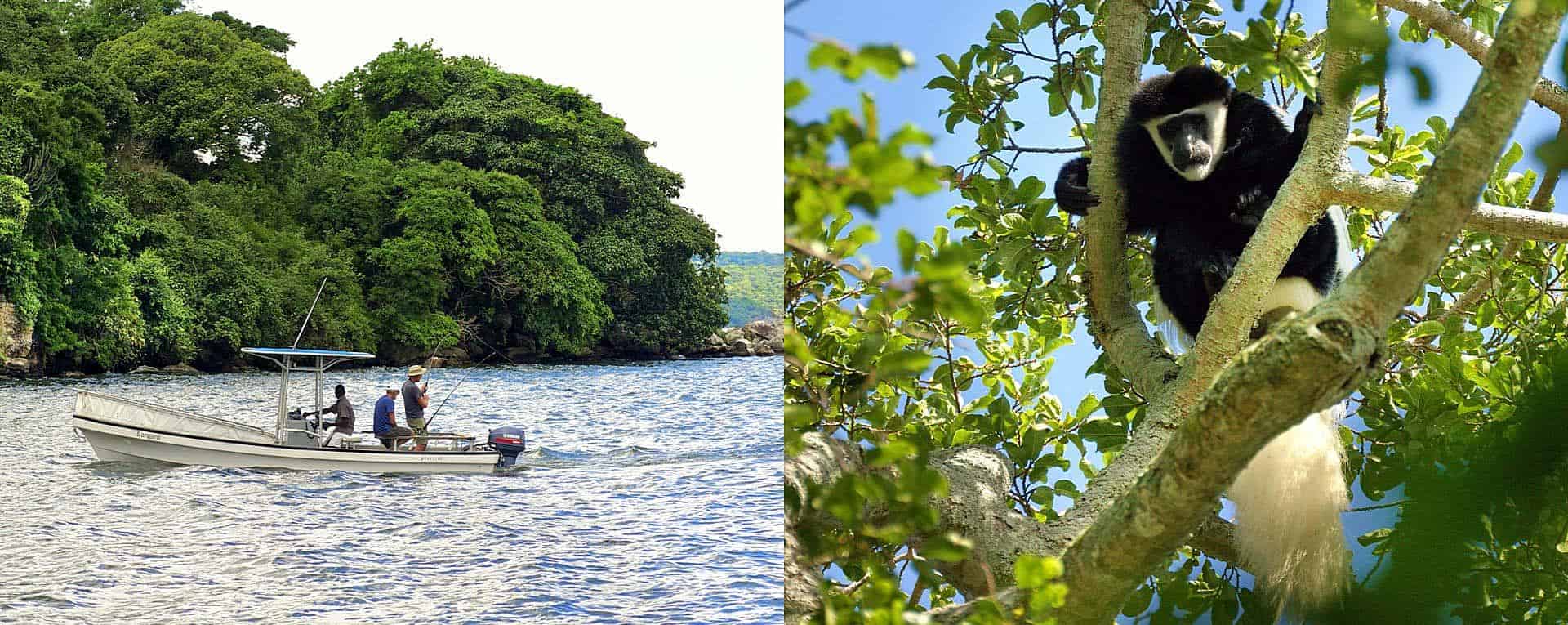
It’s unfair to say that Rubondo only hosts chimpanzees. This remote island on Lake Victoria is nestled in the northwest, near Mwanza. But there’s a lot to see here. Chimpanzees are not native to this island. They were brought in an attempt to rehabilitate the island. Today, about 60 chimpanzees live in their new home alongside other animals, like elephants, giraffes, impalas, hippos, crocodiles, bushbucks, sitatunga antelope, and primates, like vervet monkeys and black-and-white monkeys.
Here, you track these primates with an expert guide. Although chimpanzee trekking is yet to gain popularity, at least you have the chance to see them. And you can do a safari drive in a jeep to explore wildlife, unlike in Gombe and Mahale, where exploration is primarily on foot.
On top of wildlife viewing, you explore Lake Victoria by boat and by canoe. The only dependable location for camps is Asilia’s Rubondo Island Camp. It features eight rooms, perfectly designed to offer intimacy and seclusion. Please note that the lodge closes from April through May. Seeing chimpanzees in the wild is exhilarating. As you plan your next adventure, trust Focus East Africa Tours. Whether it’s in Gombe, Mahale, or Rubondo, we are sure you’ll enjoy your trip.