
Tips to Avoid Missing the Great Migration
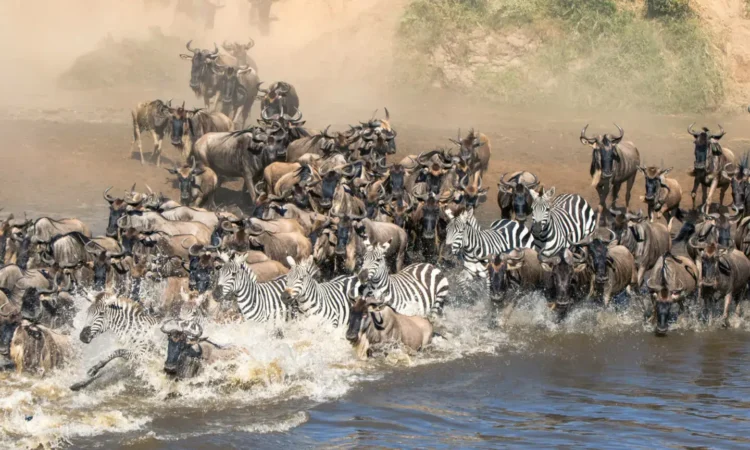
Every year, wildebeest, zebra, and gazelle in massive herds follow the migration routes in the Serengeti-Mara ecosystem, from the south to the north. And the drive? Rainfall—yes, they go after the rainfall.
Though not scientifically proven, some suggest that these hoofed animals can detect lightning from miles away. Since rainfall turns the plains greener, these animals never settle for less: they move in the direction they feel will find greener grazing grounds.
Due to the unpredictability of this event, some guests sometimes miss the crucial moments. Nothing is boring like this: you arrive in Serengeti National Park and find out that the migration has already happened. It’s frustrating. But we’re here to help you. In this article, we’ll give you insider tips to avoid missing the wildebeest migration. Let’s explore them.
Time the Great Migration.
This is the first and foremost concern tip. Yes, the animals have their clocks, but we can predict some of the events even with rough estimates. Here’s a simple timeline.
January to March
The wildebeest migration is in the southern plains of the Serengeti. The herds spread in the southeastern plains and the Ndutu area, where they find nutrient-rich grass to eat.
Within this period, animals give birth to about half a million calves. And some days they may welcome about 8,000 calves in a day. Predators also head south to find easy pickings for a meal and to be overlooked, finding young.
This event is overlooked; finding it is very difficult (almost impossible), and it’s very difficult to miss. If you plan your visit within this time range, finding young animals and predatory actions is a sure thing.
April to June
The herds are moving north from the south. By May, they are spread in the central Serengeti, especially in the Moru Kopjes. And as June sets in, herds are in the western corridor.
If you plan your migration within this time range, you have better odds of spotting the Grumeti River crossings. In addition to that, wildebeest bulls usually fight over females during the rutting season (April to June).
July to September
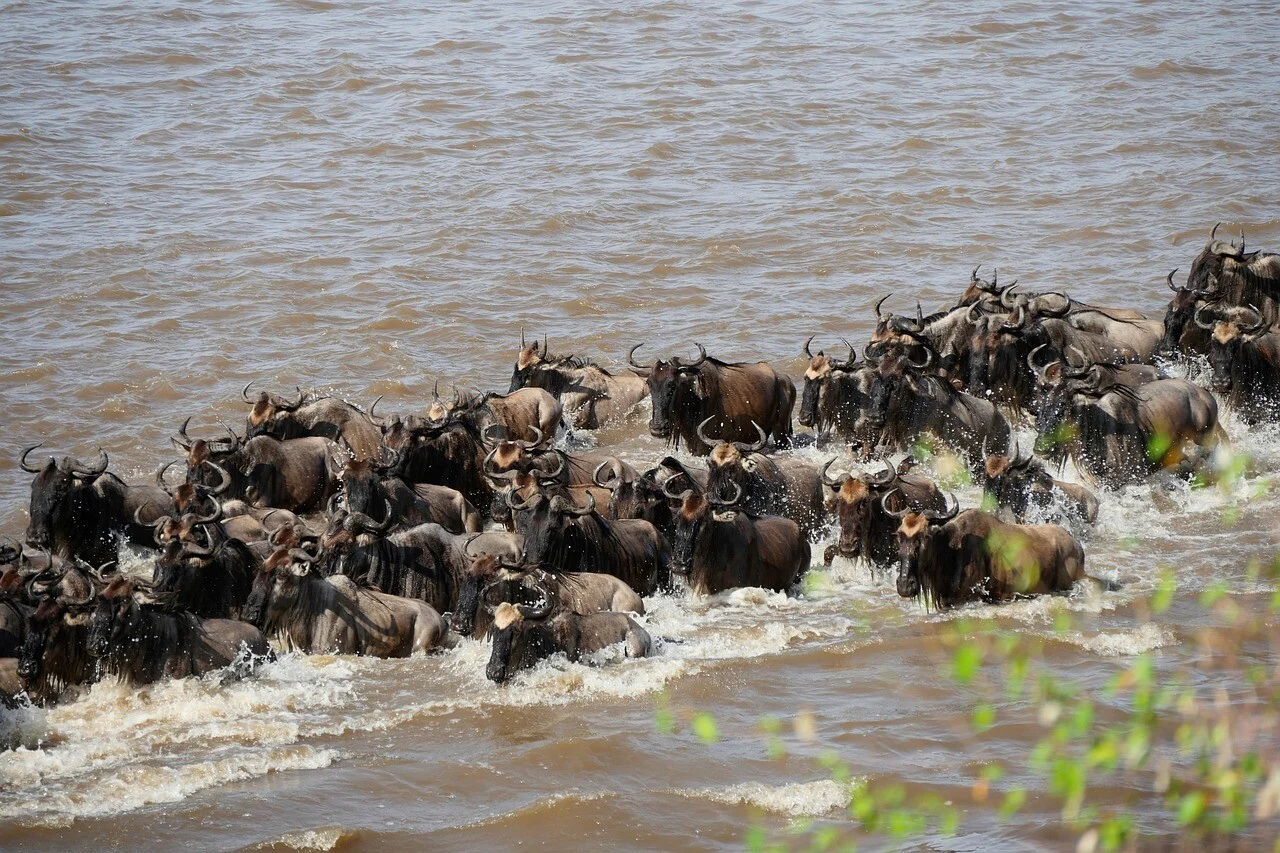
Most guests anticipate this time. And of course, the grand finale of this event happens within this time range. The animals cross the Mara River, one of the most sought-after scenes.
Crossings (on the Serengeti side) may start in late June and extend to October, depending on the season. But they may sometimes stop crossing early. It’s a natural event; no human forces them to cross.
Plan with a trustworthy tour operator.
Imagine you reach out to a tour operator asking if you can find the wildebeest migration in the Serengeti. The tour operator assures you it will, and once you arrive, you find out it happened weeks before you even reached out. This hurts.
That’s where the question of experience comes in. And authenticity. Newbies may, of course, make mistakes accidentally. But this incident rarely happens to experienced guides. So, make sure you hire a trustworthy tour operator who knows the wildebeest migration inside out.
At Focus East Africa Tours, we have our values. We always tell clients what to expect depending on their travel time. On top of that, our safari guides in Serengeti and Masai Mara will give updates on the current location of the Great Migration. Also, we operate in the Serengeti and Masai Mara, so if you miss the migration on the Serengeti side, you can visit the Masai Mara instead.
Know what to expect.
Sometimes you may have higher expectations about the Great Migration. That dramatic scene in the National Geographic documentary might have happened years ago. And every river crossing is different, some with less drama and others with more drama.
Therefore, appreciate even little things unveiled right in front of you. By doing this, greater moments might come as a surprise, making them unforgettable. Apart from river crossings, you can search for other animals like the Big Five.
Swap the northern Serengeti for the central, where you can find big cats (lions, leopards, and cheetahs). You can also do a balloon safari to watch the wildebeest herds from above.
Stay longer.
Consider a longer trip instead of staying there for one or two days. This increases your chances of seeing it. The animals may not cross the river for a day. We recommend migration safaris to last for three days or more. Stay longer near crossing points, but be patient. It will happen on its own.
Be in touch with your guide.
Sometimes it’s just a few calls with your tour operator changing your mindset. Some guests go silent after they have booked their migration safari. This may result in missing important updates, especially if you want to catch unpredictable events like the Mara River crossings.
Don’t get us wrong. It doesn’t mean you have to call us every day. But we will update you via email or phone when your favorite wildlife moments start happening. Staying informed can help you see the migration.
The bottom line.
Missing the wildebeest migration happens. At least we are here to help you catch this majestic wildlife migration. You can trust us with your migration. Are you ready? Let’s start planning your next adventure today.